what is the best ph for amylase to work
The Effects of Temperature, pH and Enzyme Concentration on Amylase
Written past Sarah
Introduction
Enzymes are proteins that are critical to catalyzing reactions (Brooker, Widmaier, Graham & Stiling, 2011). Like nearly proteins, they are synthesized by the ribosomes in the cell. They react with a specific substrate in order to increment the charge per unit of a chemical reaction within the cell. Without enzymes, reactions would exist significantly slower and nosotros would non be able to do the nearly basic functions, such equally animate or digesting food.
Amylase is an type of enzyme. Amylase has an active site organized in subsites, each of which accommodates a glucose residual (Talamond, Noirot & de Kochko, 2005). Information technology breaks down starch to glucose, giving food that sweetness taste. An instance of amylase in the natural earth is in bananas. When they are greenish, the amylase has yet to intermission down the starch, just past the time they've turned brown, the reaction has been completed. This is why brown bananas gustatory modality sweeter than their green counterpart.
Within this experiment, the objective was to test how temperature, pH level and enzyme concentration changed the effectiveness of amylase.
Methods
Beginning, an indicator experiment was performed. In 2 test tubes, a ane mL (millimeter) sample of starch solution was pipetted. The aforementioned was washed with 1 mL of maltose solution into another two tubes. Into i of the test tubes of maltose and one of starch, five drops of I2KI were added. In the other two examination tubes of maltose and starch, 5 drops of Benedict'southward reagent were added. The test tubes with Benedict's reagent were placed in a hot sand bath. All four tubes were then watched for color change, indicating a reaction.
The activity of amylase was and so observed through three reaction mixtures. The first mixture was 1 mL of starch solution and 1 µL (microliter) of amylase solution. The 2d was 1 mL of starch and 50 µL of water. The third and terminal was 50 µL of amylase and 1 mL of h2o. Immediately a drop of each mixture was transferred to a separate well on a spot plate and a driblet of ItwoKI was added. This was then repeated every minute. The color was observed with the passage of time to conclude whether amylase action was nowadays or not. Later on 8 minutes, 5 drops of Benedict's reagent was added to all three tests tubes which were then placed in the hot sand bathroom. The tubes were observed for color modify, indicating the presence of maltose.
The effects of temperature were observed through three water baths set to 4°C (Celsius), 23°C and 37°C with a solution of pH seven starch solution resting in all three. Fifty µL of amylase solution was pipetted into a test tube which was placed in the h2o bath for 1 minute. And so, 1 mL of the temperature equilibrated starch was added. Immediately a drop of the reaction was transferred to the spot plate and 1 drop of IiiKI was added. This footstep was repeated every infinitesimal to examination the presence of starch. Consummate this process for all three temperatures. At the end, 5 drops of Benedict'south reagent was added and the tubes were placed in the hot sand bath.
Next, pH levels were tested. Iv test tubes were filled with 1 mL of pH 4, five, half-dozen and 7 starch solutions respectively. And so l µL of amylase were added to each tube and immediately, 1 driblet of each mixture was transferred to the spot plate and a drop of I2KI was added. This was repeated at one minute intervals. After 8 minutes, add 5 drops of Benedict'due south reagent was added to the test tubes and they were placed in the hot sand bath.
Finally, the effects of enzyme concentration were tested. One mL of pH 7 starch solution was pipetted into 3 test tubes. To one test tube, 50 µL of five% enzyme was added, 50 µL of 10% enzyme to some other and fifty µL of twenty% enzyme to the final tube. I drib of each mixture was immediately transferred to the spot plate and a drop of ItwoKI was added. This was repeated every minute. After viii minutes, 5 drops of Benedict's reagent was added to the examination tubes which were and then placed within the hot sand bath.
Results
Within the indicators experiment, the first test tube changed from clear to dark purple. The second tube changed from bluish to yellow. The third tube didn't change and neither did the fourth.
For the activity of the amylase experiment, tube i indicated starch within the first examination but didn't later. Tube two indicated starch for all 8 minutes. Tube 3 never indicated starch. Only tube 1 changed whatever colour afterward exposure to Benedict's reagent and heat, proving maltose was present.
Temperature seemed to take a positive correlations with the speed of the reaction. The 37°C completed the reaction the quickest. This is shown in Effigy 1. Maltose was shown to be present in all three test tubes.
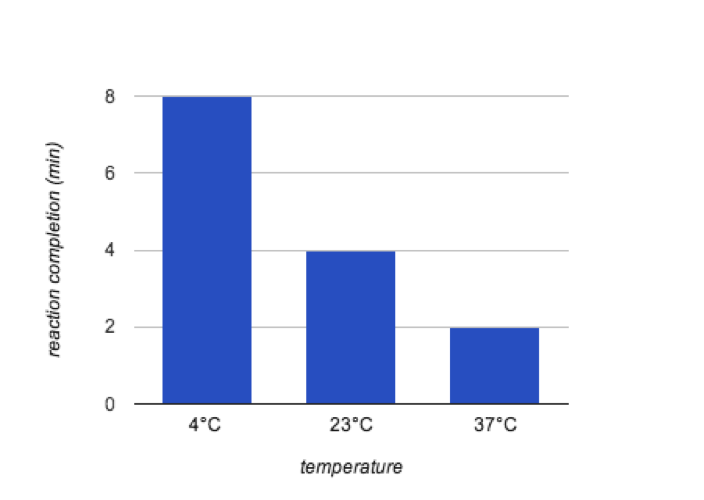
Figure one. The Furnishings of Temperature on Enzyme Action
The correlation of pH doesn't seem as articulate. Examination tubes 2 and three, which contained pH 5 and 6 starch, completed the reaction at the aforementioned time. Effigy 2 shows the reaction rates of the different pH levels. Maltose was present in all examination tubes.
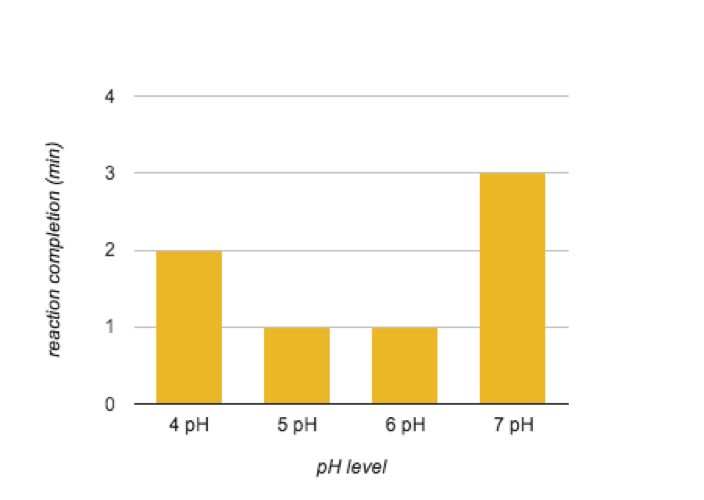
Figure 2. The Furnishings of pH Level on Enzyme Activity
As the concentration of amylase increased, the reaction time decreased. Figure 3 shows the directly correlation. All three tubes had maltose present.
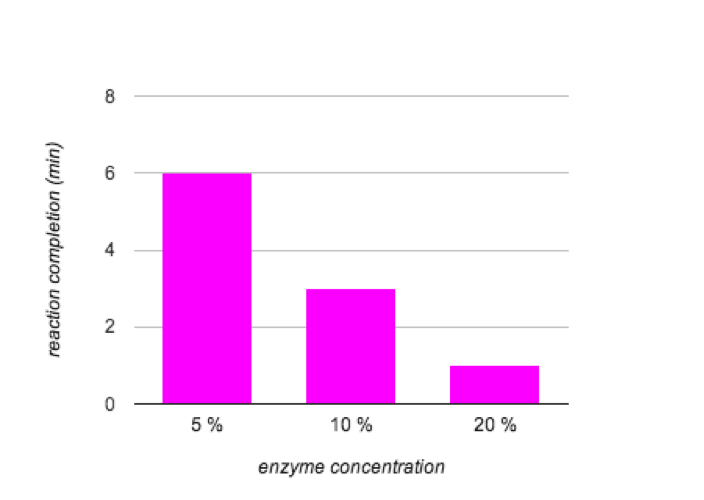
Figure 3. The Effects of Enzyme Concentration on Activity
Discussion
In the indicator experiment, it was necessary to test what each indicator marked. This immune for I2KI to be used to indicate starch and Benedict's reagent to be used to indicate maltose. The controls/amylase activeness experiment showed that it is necessary for both starch and amylase to exist mixed in order for the reaction to occur. As expected, every bit the temperature increased, and then did the speed of the reaction. This is expected because this reaction often occurs in the human torso where the temperature is usually 37°C. The results of the pH experiment did non clearly show what the best level for the enzyme was. The concentration experiment was much more articulate. The 20% concentration reacted the fastest because there was more enzymes to react with the substrate and create maltose.
Literature Cited
Brooker, Robert J., Eric P. Widmaier, Linda East. Graham, and Peter D. Stiling. Biological science. 2nd ed.
New York: McGraw Hill, 2011. Print.
Talamond, Pascale, Michel Noirot, and Alexandre De Kochko. "The Machinery of Activeness of
α-amylase from Lactobacillus Fermentum on Maltooligosaccharides."Journal of
Chromatography B (2005): 42-47. Science Direct. Spider web.
Source: https://www.odinity.com/effects-temperature-ph-enzyme-concentration-amylase/
0 Response to "what is the best ph for amylase to work"
Post a Comment